Thinking about a 360 photo booth? Here’s how it changes the feel of an event and why people keep coming back to it.
You don’t really get a 360 photo booth until you’ve seen one at an event. Before that, it just sounds like an upgrade. A better version of something that already exists. But when it’s actually there, it doesn’t behave like an upgrade at all. It changes the way people act in that space.
It Doesn’t Start Big, It Builds
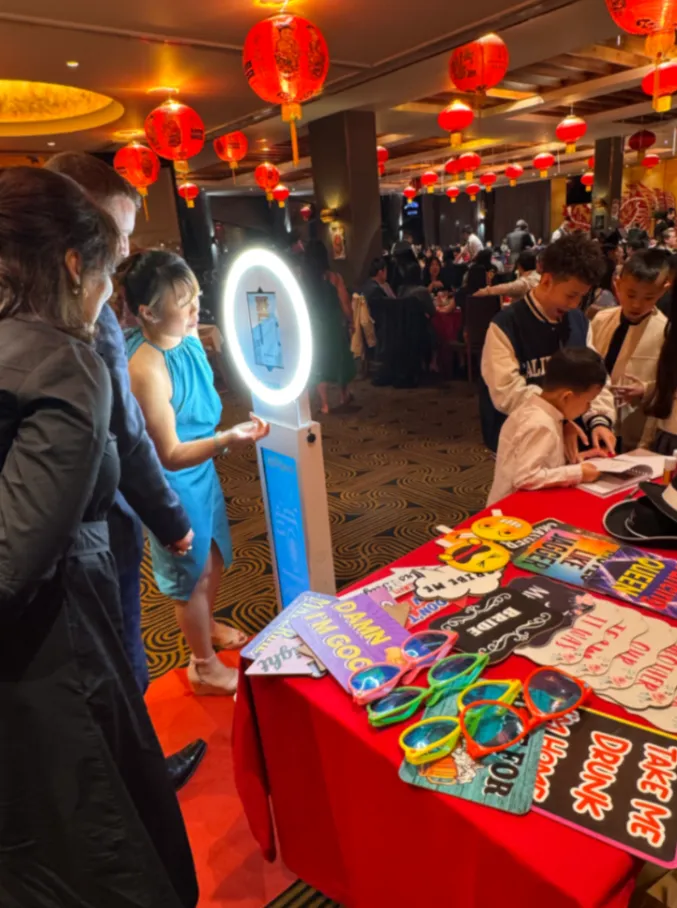
Nothing dramatic happens at the start. Someone walks over, usually just to see what it is. Maybe they try it, maybe they hesitate for a second. The camera starts moving, they react a bit awkwardly, then laugh it off. A few people nearby watch. That’s usually enough.
After that, you’ll notice more people drifting in. Not all at once, just gradually. It builds in the background without needing attention.
People Stop Trying to Get It “Right”
With normal photos, there’s always that small pause. Fix your posture, look at the camera, smile properly. Here, that doesn’t really happen.
The camera is already moving, so people don’t get time to prepare in the same way. Some go over the top, some barely move, some just laugh through it. It’s less controlled. A bit messy sometimes. But that’s also why it feels more like the actual moment.
There’s Always a Small Crowd Around It
Even when someone else is on the platform, it doesn’t feel like a solo thing. There are always people watching. Reacting, commenting, sometimes even directing the person in the middle. It turns into a shared moment without being planned like one. And that part matters more than the video itself.
People Come Back to It
A lot of event features get used once. This doesn’t. You’ll see the same people return later with a different group. The first time is usually cautious. The second time is louder, more relaxed. It follows the mood of the event as it changes.
The Video Feels Like Something You Were Actually In
When people get their clip, they don’t just check it quickly and move on. They watch it properly. Not because they’re judging it, but because it shows more than they noticed at the time. Small reactions, movement, people in the background. It feels closer to how the moment happened, not just how it looked.
Where ClickPlick Comes Into It (Without Making It a Big Deal)
The thing that usually decides whether people use something or ignore it is how easy it feels. If it looks confusing, people hang back. If it feels simple, they step in. With ClickPlick setups, that part is handled well. People don’t need to ask what to do. They watch once and get it.
Which is why it doesn’t sit unused like some other setups do.
It Doesn’t Take Over the Event, It Just Changes It Slightly
This is probably the easiest way to explain it. It doesn’t become the entire event. It doesn’t replace anything else. But it shifts things just enough. People move around a bit more. Interactions feel less fixed. The energy changes slightly over time. Nothing dramatic, just noticeable.
Final Thought
A lot of things at events are easy to describe before they happen. This isn’t really one of them. It makes more sense when you see how people react to it in real time. Not the setup. Not the features. Just the way people behave around it. That’s the part that sticks.